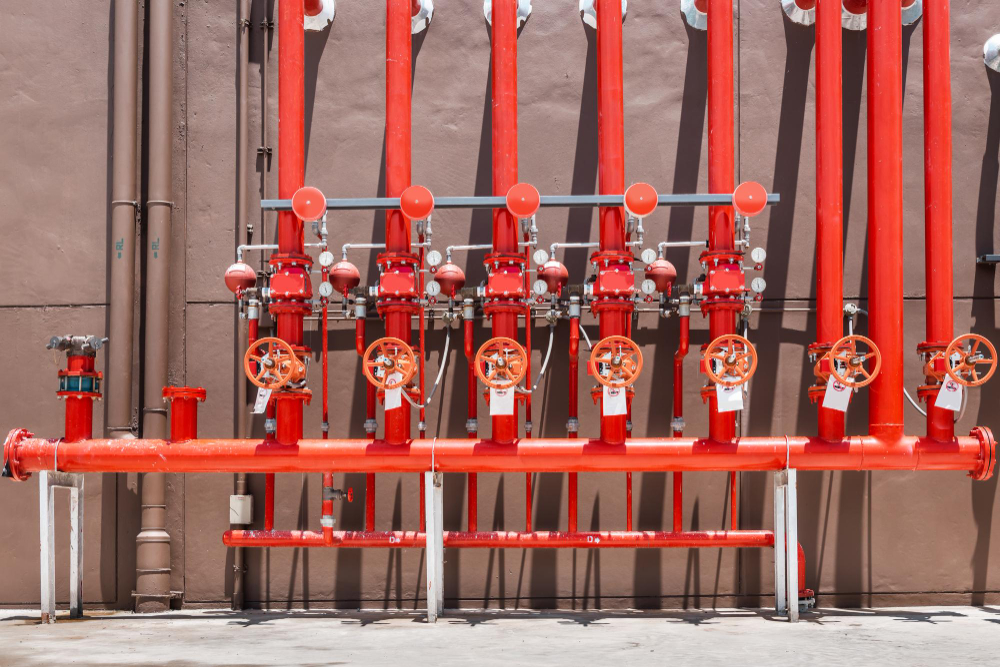
Fire Suppression System

A Fire Suppression System is a safety system designed to detect and automatically extinguish or control fires in their early stages, helping to protect people, property, and equipment. These systems are commonly installed in areas where the risk of fire is high or where traditional firefighting methods may not be fast or safe enough.

Unlike standard fire alarm systems that only alert occupants, fire suppression systems are active systems—they take direct action to stop the spread of fire by releasing a suppression agent.

Fire Suppression System

Main Components

1

Fire Detection Devices
  • Smoke detectors, heat sensors, or flame detectors that identify the presence of fire or excessive heat.

2

Control Panel
  • Acts as the brain of the system, receiving signals from detectors and activating the suppression process

3

Distribution System
  • A network of pipes, valves, and nozzles that delivers the suppression agent to the fire-affected area.

4

Suppression Agent
  • The material used to extinguish the fire. Common agents include:
    • Water (sprinklers)
    • Foam (for flammable liquids)
    • CO₂ (for electrical and industrial fires)
    • Clean agents like FM-200 or Novec 1230 (safe for electronics and data centers)
    • Wet chemicals (used in kitchen hoods)

Kitchen Hood Fire Suppression System - Ansul R-102

1

System Advantages

Rapid, automatic fire extinguishing at the source to protect lives and property.
Minimizes damage and downtime in the kitchen.
Ensures regulatory compliance with NFPA 96 & NFPA 17A standards.
Automatically detects and suppresses fires, reducing the risk of injury and eliminating the need for staff to fight fires manually.

2

Ansul R-102 System Details

Pre-engineered, automatic, and manual fire suppression system specifically designed for commercial kitchen hoods, ducts, and cooking appliances.
Provides fast flame knockdown, cooling of hot surfaces, and vapor suppression to prevent re-ignition.
Ensures kitchen safety and compliance with NFPA 96 and NFPA 17A standards.

3

Documentation & Certification

UL Listing Certificate
NFPA 17A & 96 Compliance
Manufacturer’s design approval and drawings
Hydraulic calculation sheet (if applicable)
Commissioning & handover report

Kitchen Hood Fire Suppression System

The main advantages of a kitchen hood fire suppression system are rapid, automatic extinguishing at the fire source, protecting lives and property, minimizing damage and downtime, and ensuring regulatory compliance. These systems automatically detect and suppress fires, reducing the risk of injury to staff and eliminating the need for manual firefighting.

The Ansul R-102 Fire Suppression System is a pre-engineered, automatic, and manual system designed to protect commercial kitchen hoods, ducts, and cooking appliances from grease-based fire hazards. It delivers fast flame knockdown, cools heated surfaces, and suppresses vapors to prevent re-ignition — maintaining safety as per NFPA 96 and NFPA 17A.

Documentation & Certification
  • UL Listing Certificate
  • NFPA 17A & 96 Compliance
  • Manufacturer’s Design Approval & Drawings
  • Hydraulic Calculation Sheet (if applicable)
  • Commissioning & Handover Report

Types of Fire Suppression Systems

  • Commercial kitchens
  • Data centers and server rooms
  • Industrial plants and factories
  • Warehouses and storage areas
  • Offices, hospitals, and public buildings
  • Marine vessels and vehicles

Where It’s Used

  • Automatic fire control and extinguishing
  • Fast response time reduces fire damage
  • Protects lives, equipment, and critical operations
  • Minimizes business disruption and downtime
  • Complies with fire safety codes and insurance requirements

Benefits

  • Automatic fire control and extinguishing
  • Fast response time reduces fire damage
  • Protects lives, equipment, and critical operations
  • Minimizes business disruption and downtime
  • Complies with fire safety codes and insurance requirements